
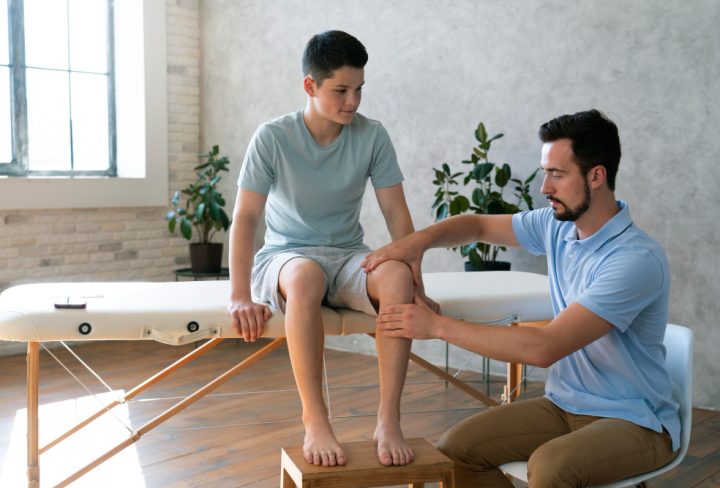
Knee ligament injuries are common, especially among athletes and active people. These injuries can cause pain, swelling, and trouble moving the knee. Physical therapy for knee ligament injuries is a key part of recovery. It helps restore strength, movement, and confidence. With the right care, most people can return to their daily activities safely.
What Are Knee Ligament Injuries?
The knee has four main ligaments. These are strong bands that connect bones and keep the knee stable. The most commonly injured ligaments are:
Often, these injuries happen during sports, falls, or sudden twists. For example, an ACL tear can occur when you quickly change direction. Symptoms may include pain, swelling, and a feeling that the knee might give way. Early treatment is important for the best recovery.
How Physical Therapy Helps Knee Ligament Injuries
Physical therapy plays a big role in healing knee ligament injuries. First, it helps reduce pain and swelling. Then, it focuses on restoring movement and strength. Physical therapists create a plan that fits each person’s needs. This plan may change as you heal. For many, physical therapy can help avoid surgery or make recovery after surgery smoother. In addition, it teaches safe ways to move and protect the knee.
Common Physical Therapy Techniques for Knee Ligament Injuries
Physical therapists use many techniques to help knee ligament recovery. Some common methods include:
As you progress, your therapist may add more advanced knee ligament recovery exercises. Always follow your therapist’s advice for the best results.
Benefits of Physical Therapy in Recovery
Physical therapy offers many benefits for knee ligament injuries. Some of the main advantages include:
Moreover, physical therapy benefits for knee injuries are well-supported by research. According to the CDC, early rehab can lead to better long-term outcomes. With expert guidance, you can recover safely and fully.
Tips for Safe Rehabilitation at Home
While working with a therapist is important, you may also do some rehab at home. Here are some tips for safe home recovery:
Above all, listen to your body. If you feel new pain or swelling, stop and contact your therapist.
Prevention of Future Knee Injuries
After a knee ligament injury, it is important to prevent future problems. Here are some helpful steps:
With these habits, you can lower your risk of another injury. Prevention is always better than cure.
Conclusion
Physical therapy for knee ligament injuries is vital for healing and safe return to activity. With the right plan, you can regain strength, movement, and confidence. If you have a knee injury, consult a physiotherapist or healthcare provider for advice tailored to your needs.